Complete IoT Stack

One integrated product for business IoT operations

insigh.io combines a modular IoT logger, a no-code local configurator, flexible connectivity, and cloud operations in a single offering that scales from pilot to production.

Use it either off-the-shelf to implement your own IoT deployments or as a building block to create custom IoT products.

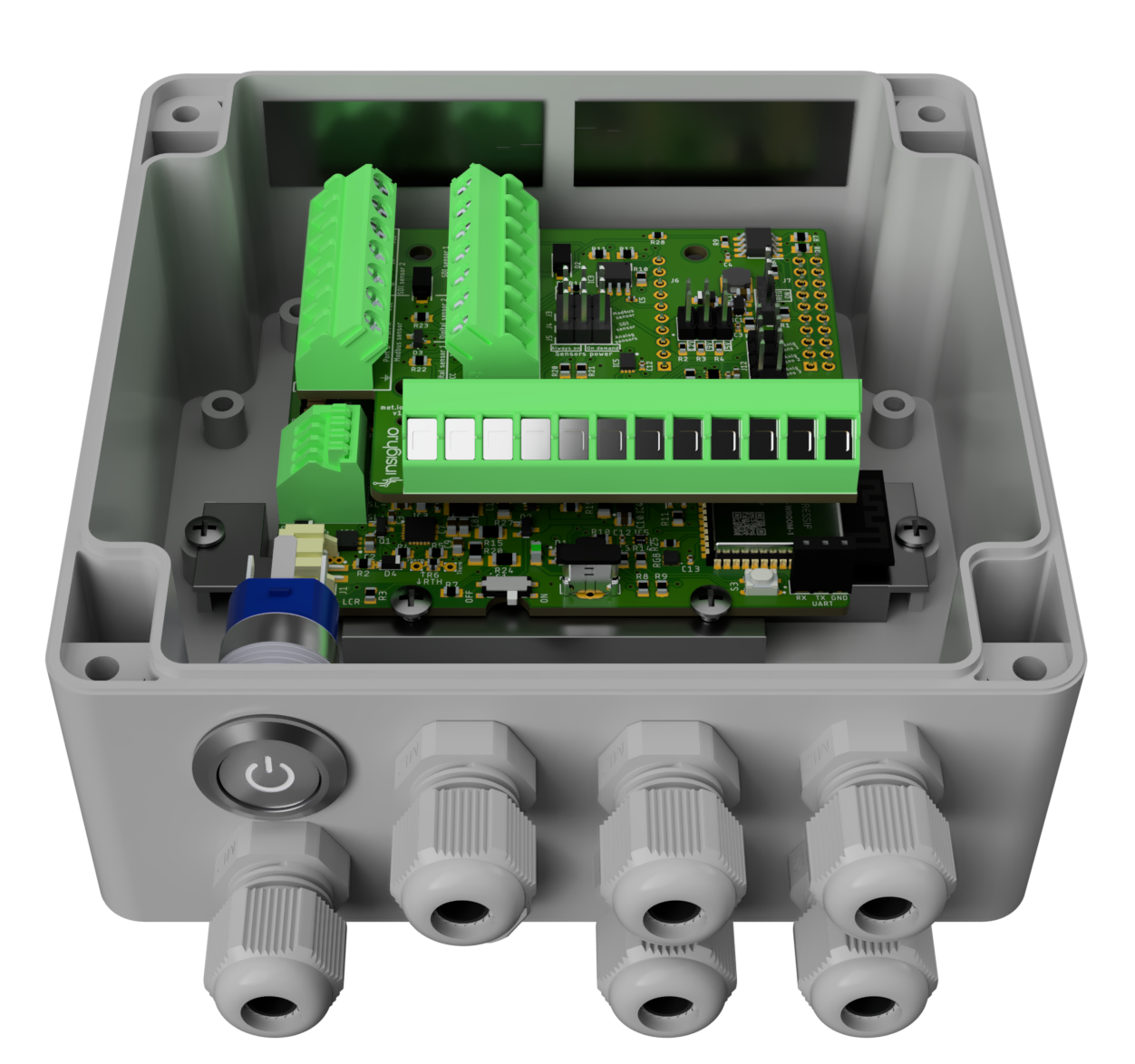
insigh.io IoT logger bundle in box with open lid

Hardware

IoT Main Board

Proven reliability with low battery consumption, GPS, WiFi & Cellular modem, and multi-power support (Battery, USB, Solar).
Sensor & Connectivity Shields

Expand with sensor protocol shields and extra connectivity modules to fit your exact deployment model.

Certified Device Bundle

Main Board, selected shield, antennas, battery, IP-rated box, SIM card, optional solar panel, conforming with EU regulations.
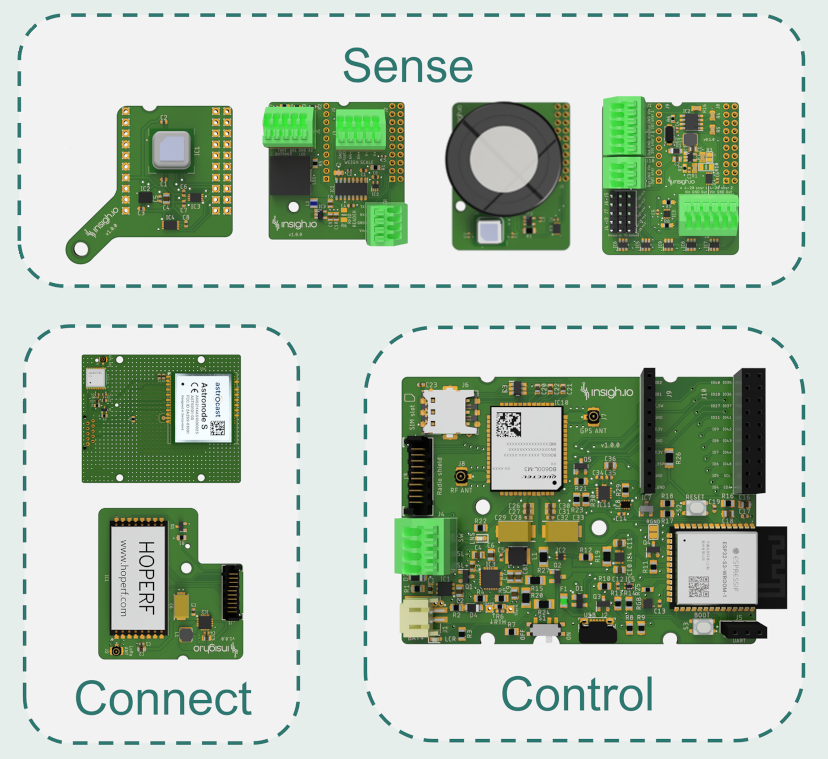
insigh.io hardware configuration with main board and shields

Your Deployment-Ready Solution

  • Start with the insigh.io main board.
  • Select the suitable sensor shield for your application and sensors.
  • Cant find a sensor shield that matches your needs? Contact us!
  • Optionally add a connectivity shield when WiFi and Cellular are not enough.
  • Configure the logger with our open firmware.
  • Power on and check measurements directly on insigh.io's Cloud Platform.
  • Place the hardware to the provided outdoor enclosure, attach the battery, connect the solar panel and the external sensors.
  • Deploy, scale and enjoy IoT data!
Hardware Deep Dive
  • Multi-network design with WiFi, Cellular, LoRa, and Satellite options.
  • Built-in GPS and power management with battery, USB, and solar support.
  • Expansion headers for SDI-12, Modbus RTU, Analog Input, 4-20mA, I2C, pulse counting, load cells, and AC energy monitoring.
  • Additional connectivity through expansion shields for specialized deployments.
  • Custom shield prototyping paths for use cases not covered by existing modules.

Firmware

Open-source MicroPython

Transparent firmware approach with active releases and GitHub availability.

Operational Features

Local setup wizard, OTA updates, remote configuration from platform, battery optimization, and resilient upload scheduling with buffering.

Firmware Deep Dive
  • Internally developed open-source MicroPython firmware with regular releases and transparent evolution.
  • Guided local setup wizard for connectivity, authentication keys, sensor profile, and upload strategy.
  • Battery monitoring and modem optimization for GSM, NB-IoT, and LTE-M scenarios.
  • Remote configuration and OTA support from insigh.io Platform.
  • Buffered uploads and execution scheduling for lower power consumption in constrained networks.
  • Pre-implemented protocol and sensor support for faster deployment without custom low-level coding.

Connectivity

Multi-Network Support

WiFi, Cellular, LoRa, and Satellite coverage for urban and remote areas.

Global IoT SIM

Each logger can include an IoT SIM with roaming agreements and 500MB for up to 10 years.

Protocol Compatibility

MQTT, CoAP, and HTTP transport options for secure and flexible integration.

Connectivity Deep Dive
  • Global IoT SIM option with roaming agreements and long-validity bundled data plans.
  • Protocol support for MQTT, CoAP, and HTTP ingestion to match different backend stacks.
  • Connectivity abstraction designed to keep field operations stable across changing network conditions.
  • Suitable for both urban and hard-to-reach remote deployments where network quality varies.

Cloud Platform

Device Operations

Project-based fleet organization, role-based access, live data streams, map view with GPS, and OTA status tracking.

Data Management

Dashboard widgets, transformations, alarms, CSV/XLSX export, and integrations via MQTT, HTTP, socket.io, and FTP.
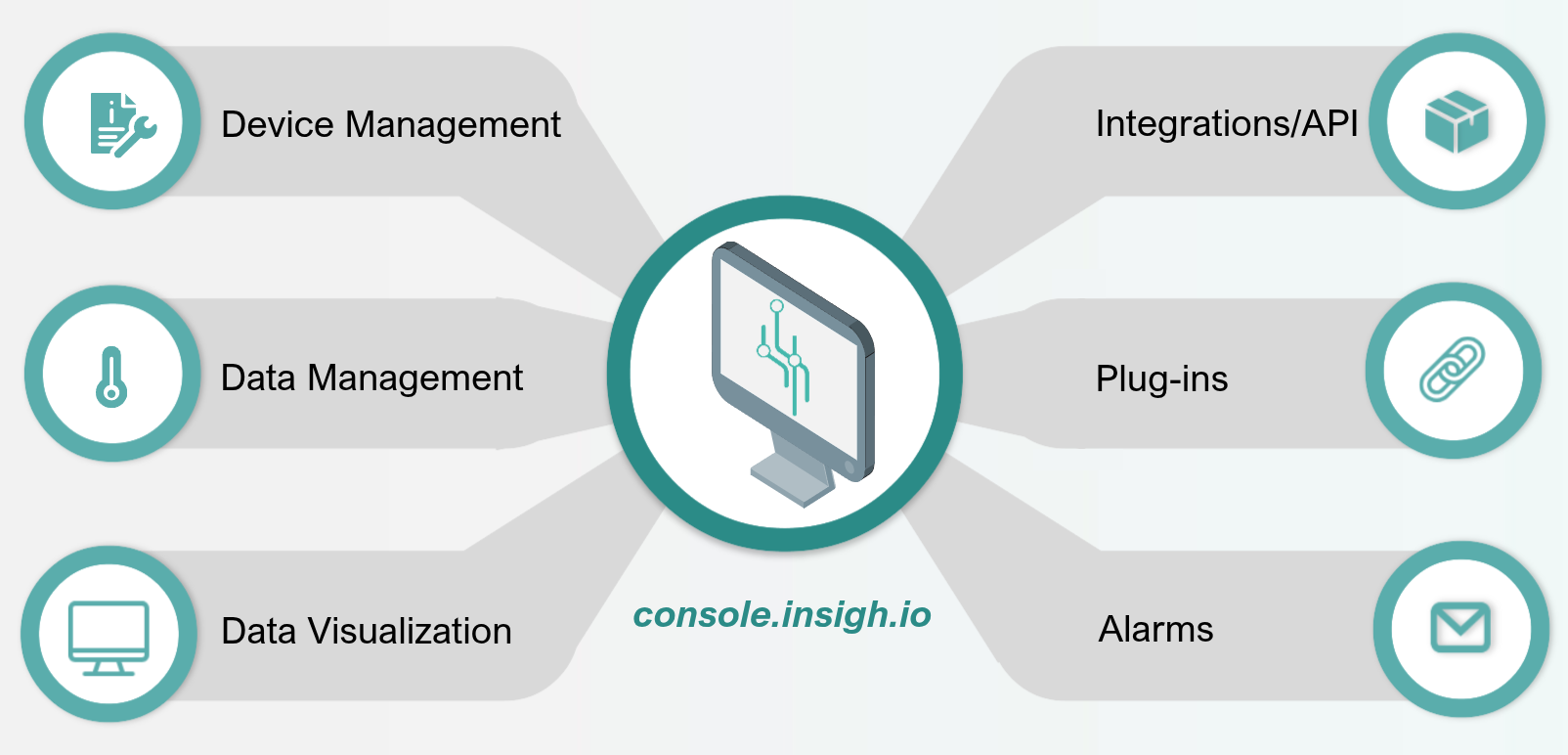
insigh.io platform capabilities overview
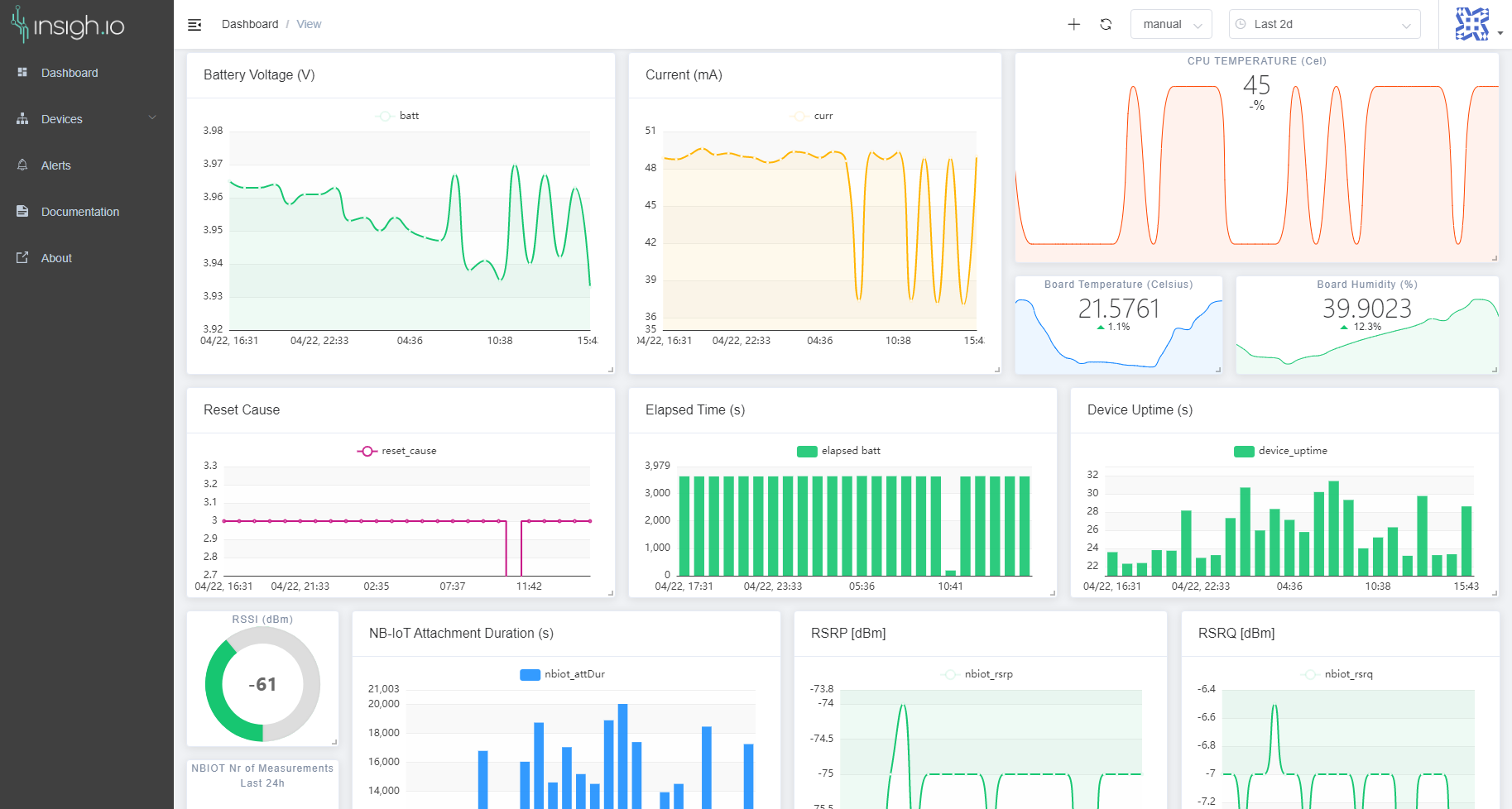
insigh.io dashboard sample
Platform Deep Dive
  • Project-based fleet structure with role-based access (admin, editor, viewer).
  • Device authorization, live telemetry streams, quick last-measurement view, and map-based positioning.
  • Device overview analytics including activity, battery trends, and OTA status visibility.
  • User-configurable dashboards with multi-device charts, scheduling options, and CSV/XLSX export.
  • Transformations for second-level measurements and formula-based derived values.
  • Plugins for third-party data ingestion coming from other IoT devices, platforms or systems via MQTT, HTTP, and FTP.
  • Built-in Integrations to push the data live to 3rd party systems via MQTT, HTTP, socket.io, and FTP.
  • HTTP API to query and acquire device data on demand.